

 A report jointly published by the Islamic Development Bank (IDB) Group and the World Bank Group has outlined the potential of Islamic finance in curbing income inequality and ending poverty worldwide.
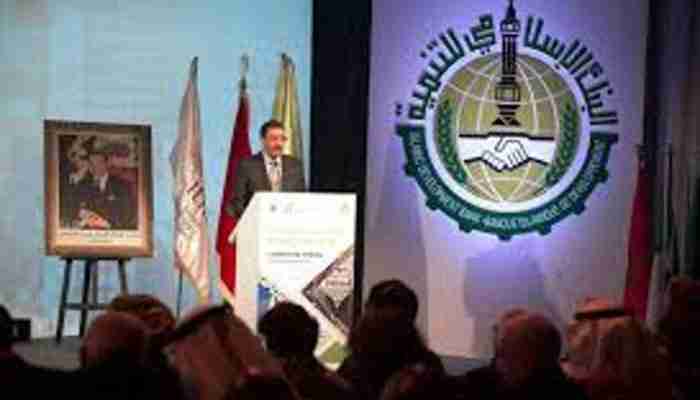
The report, subtitled “Islamic Finance: A Catalyst for Shared Prosperity?”, was unveiled on Monday by IDB Group President Dr. Bandar Hajjar at a news conference on the sidelines of the 42nd annual meeting of the IDB Group in Jeddah, Saudi Arabia, says a statement.
It details the trends in Islamic finance, identifies the major challenges hindering the industry’s growth, and recommends policy interventions to leverage Islamic finance for fostering shared prosperity and ending poverty.
IDB Group Islamic Research and Training Institute Director-General Muhammad Azmi Omar and World Bank Global Islamic Finance Development Centre in Istanbul Head Dr. Zamir Iqbal presented findings and recommendations of the report during separate sessions on the sidelines of the IDB Group annual meeting.
Recommendations
Key recommendations of the report include having adequate policy interventions and financial infrastructure, creating a level playing field for Islamic equity instruments, and creating institutions and governance systems for the Islamic social finance sector, which comprises zakat, Awqaf, and Islamic microfinance.
SECP easing Sukuk rules to facilitate Islamic finance
The report notes that the Islamic banking sector needs innovative risk-sharing products and services, enhanced scale and access to Islamic finance, improved liquidity, and stability, and bolstered human capital and literacy in Islamic finance. The development of capital markets with wider access to the public under a strong legal and governance framework is desirable for the Islamic finance sector, especially given that Sukuk (Islamic bonds) offer great potential for promoting financial inclusion and mobilizing funds for development, the report adds.
It further notes that Islamic non-bank financial institutions should provide Islamic financial services in countries where establishing Islamic banks is not possible due to legal and regulatory restrictions.
On the prospects of Islamic social finance, the report estimates that for most countries in South Asia, Southeast Asia, and Sub-Saharan Africa, the resource needs to alleviate deprivation could be met if the potential of Islamic social finance were realized.
Author

Help Us Empower Muslim Voices!
Every donation, big or small, helps us grow and deliver stories that matter. Click below to support The Halal Times.
 ‘Meat Price Deregulation to Increase Pak Exports’
Leave a Reply
You must be logged in to post a comment.